
Dental implants
Dental implants
What is a dental implant?
The dental implant represents the most modern and effective method to replace a lost tooth, with the help of which the loss and weakening of the other teeth is prevented. The great advantage of a dental implant is to replace the missing tooth in the most natural way possible.
The dental implant consists of 3 components, each with a specific role and function in a patient's oral restoration.
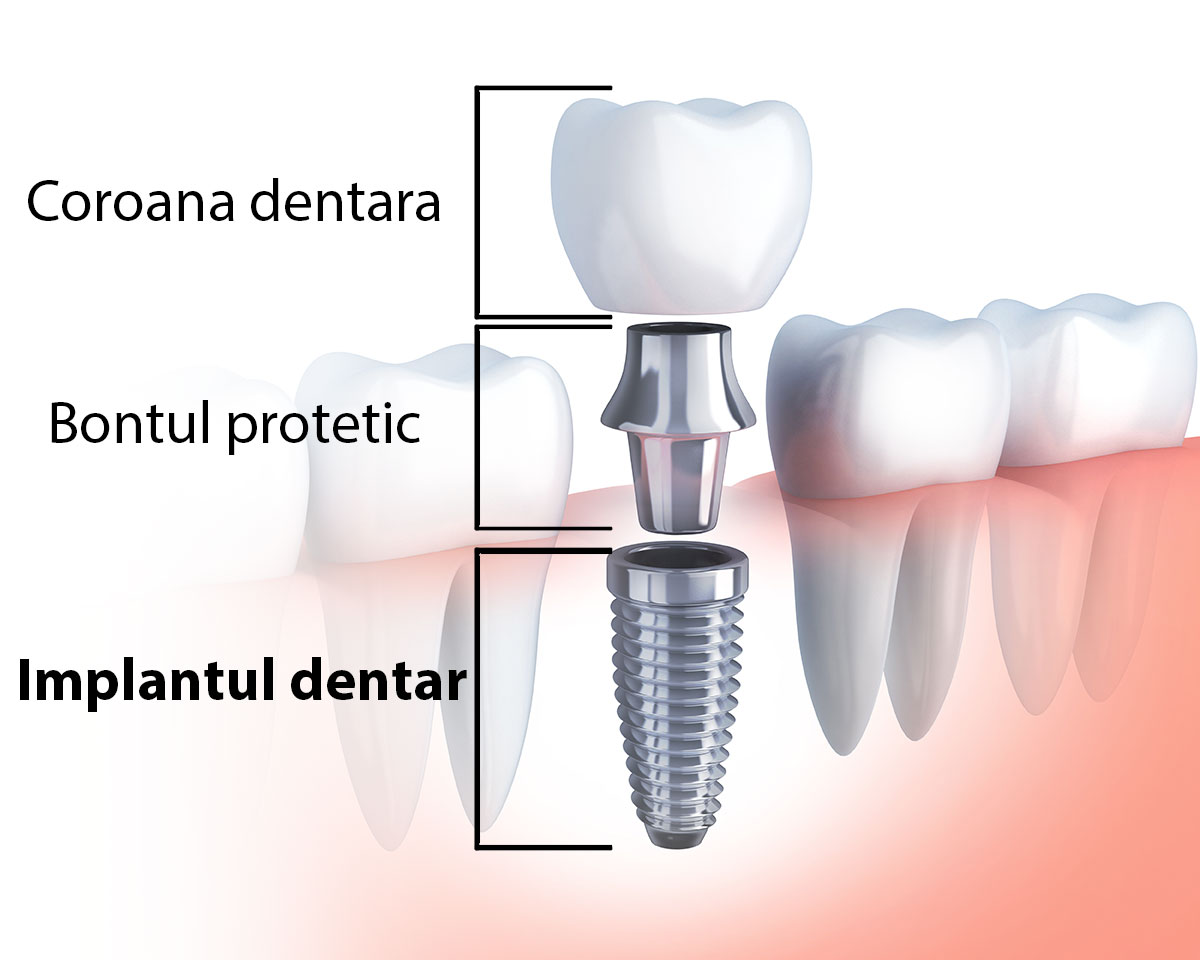
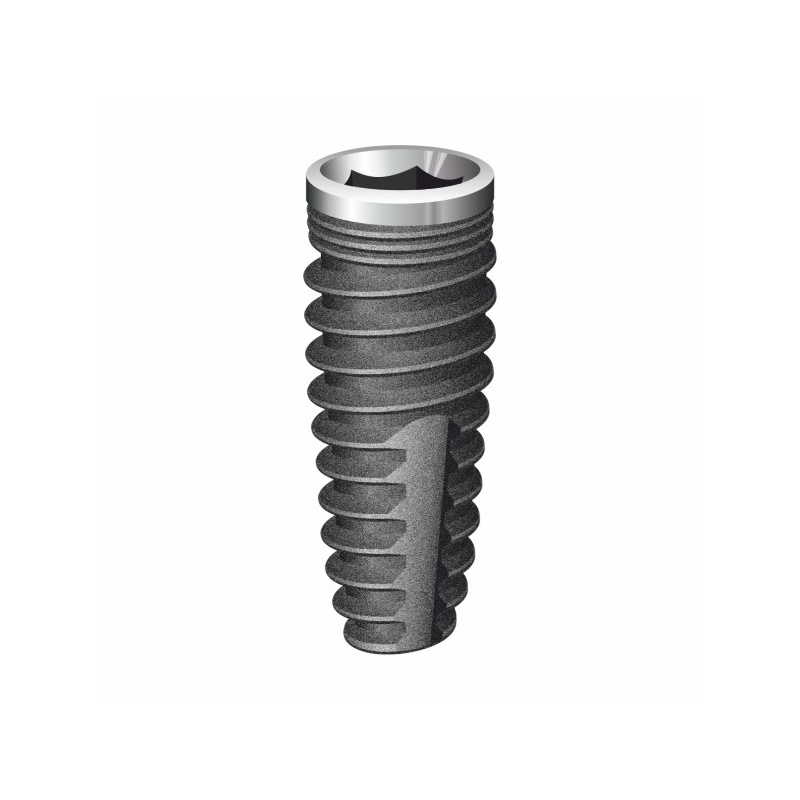
The implant itself or the screw
- It is surgically inserted deep into the jaw bone
- It has the role of the tooth root
- Made from a high purity titanium alloy
- It provides stability and support for the entire structure
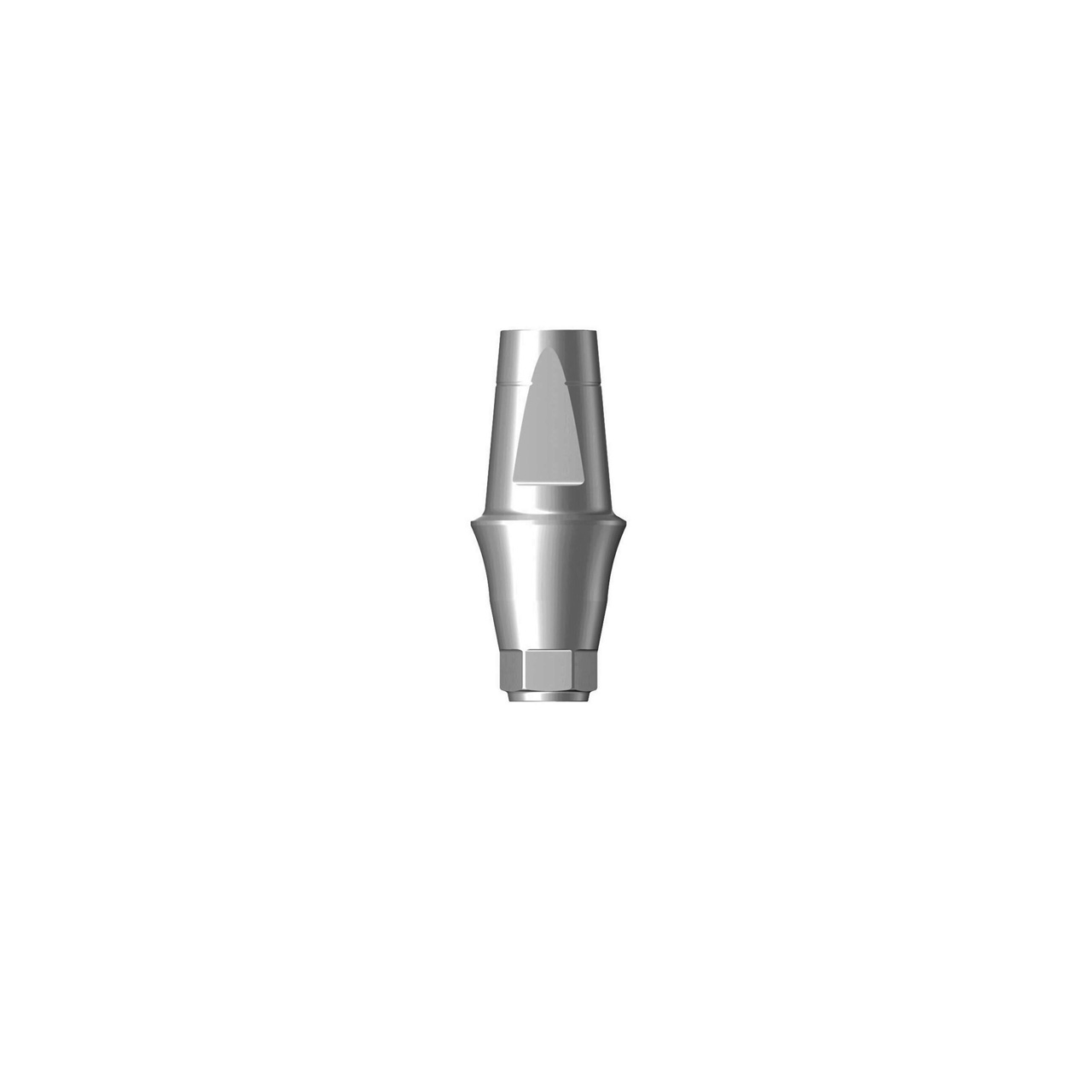
Prosthetic abutment
- It connects the implant itself to the dental crown
- Prevents bacteria from entering the dental implant
- It is located above the gum line
- It can be made of titanium or zirconium
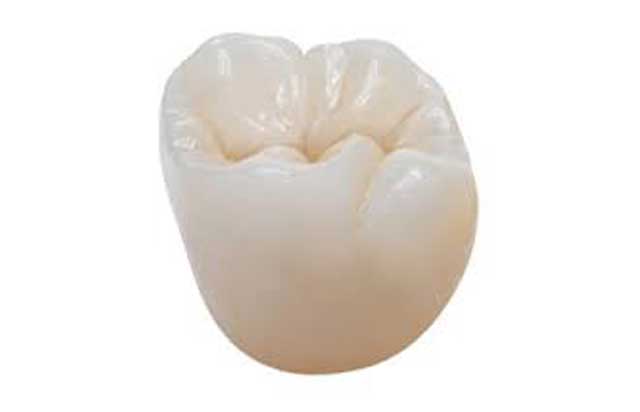
Dental crown
- The visible part of the dental implant, the tooth itself
- Aesthetic and functional role
- It is customized according to the patient (shape, color, size)
- Made of biocompatible and resistant materials
The benefits of a dental implant
- Correct mastication
- Improving the physiognomy of the face (face lifting effect)
- It looks and feels like a natural tooth
- Improved phonation and diction
- Prevents gum retraction and migration of neighboring teeth
- Protecting the bone and stopping bone atrophy
- Increased comfort and self-confidence
- Quick healing
- Prosthetic work stable and resistant over time
Other methods of replacing missing teeth, such as dentures or dental bridges, will not be effective in stopping bone atrophy or maintaining the health of neighboring natural teeth. Also, they usually have a lifespan of several years, after which they will have to be replaced or, depending on the clinical situation, other oral rehabilitation solutions will have to be found.
Stages of oral rehabilitation with dental implant
The procedure for inserting a dental implant usually involves several steps and can vary depending on the individual patient's situation. In general, patients go through the following stages:
- Initial Assessment: In this phase, the dentist will assess the patient's dental and general health and discuss treatment options. If a dental implant is chosen as a treatment option, a CT scan of the jaw will be done to determine the amount and quality of bone.
- Insertion of the implant: This stage involves placing the implant in the bone of the jaw or mandible, under local anesthesia. To do this, a small incision will be made in the gum and a hole will be created in the bone to place the implant.
- Healing Period: After the implant is inserted, the patient will need a period of time to allow the implant to integrate into the bone, in a process called osseointegration. This can usually last between 3 and 6 months, depending on the individual patient's situation.
- Placement of the healing abutment: After the correct integration of the implant,the next step is to place a healing abutment, which has the role of forming the gum around it and preparing it for the prosthetic stage. The doctor makes an incision in the soft tissue covering the implant (gum) and screws the healing abutment into the implant. After this procedure, the average gum healing time is 1-2 weeks.
- Placement of the prosthetic abutment and dental crown: After the gum has successfully healed, the healing abutment is replaced by a prosthetic abutment, which will connect the dental implant itself to the crown or prosthetic work. After the abutment is placed, the dentist will take dental impressions to create a dental crown or custom prosthetic work.
- After the treatment is completed: After the prosthetic work is fixed on the implant, the patient will need to follow proper oral hygiene and have regular check-ups with the dentist to ensure the durability of the dental treatment.